Hardneck vs Softneck Garlic for Beginners: Which to Grow
Table of Contents
Hardneck vs Softneck Garlic for Beginners: The Quick Comparison
How to Read the Table at a Glance
Hardneck Garlic Varieties: Bold Flavor and Easy Peeling
Why Cold Winters Matter for Hardneck Bulbs
Softneck Garlic Varieties: Long Storage and Warmer Gardens
Braiding and Keeping Quality After Harvest
When to Plant Garlic: Timing by Growing Zone
The Best Garlic to Grow for Beginners: A Climate-Based Decision Guide
Common Beginner Mistakes and Troubleshooting
Conclusion: Choosing Your First Garlic Crop
Frequently Asked Questions
Last Updated: October 6, 2026
Hardneck vs Softneck Garlic for Beginners: The Quick Comparison
Choosing between hardneck vs softneck garlic comes down to two things: your winter climate and how long you need the bulbs to keep. Hardneck garlic grows best where winters are cold, produces a stiff central stalk and edible scapes, and offers bold, complex flavor. Softneck garlic handles mild winters, forms a flexible neck you can braid, and stores far longer. At Central Or Garlic Co, we preserve over fifty rare, heirloom garlic cultivars, and the question we hear most from new growers is simple: which one belongs in my garden?

This guide answers that. Below, we break down the structural differences, match each type to a growing zone, and walk through planting, harvest, and storage so your first crop actually succeeds.
Feature | Hardneck Garlic | Softneck Garlic |
Central stalk | Stiff, firm stalk | Flexible stalk |
Clove count per bulb | Fewer, larger cloves | More, smaller cloves |
Cold hardiness | Excellent | Moderate |
Best climate | Cold winters | Mild winters |
Scapes | Edible scapes | None |
Storage life | Shorter | Longest |
Flavor | Bold, complex | Milder, sharp when raw |
How to Read the Table at a Glance
Start with the climate row. If your winters drop below freezing for weeks, hardneck is the safer bet. If your winters stay mild, softneck will outperform it. Then check storage: softneck keeps longest, which matters if you cook through the winter. Flavor and clove size are personal preferences you can fine-tune by variety.
Hardneck Garlic Varieties: Bold Flavor and Easy Peeling
Hardneck garlic is the type closest to wild garlic, and it shows in the flavor. These bulbs produce fewer but larger cloves that peel in seconds, which is why cooks reach for them first. Popular hardneck varieties include 'German Red' and 'Chesnok Red', both known for rich, pungent heat.
The trade-off is storage. According to The Spruce's garlic storage guide, hardneck garlic typically lasts three to five months after harvest, while softneck keeps considerably longer. For a home cook who uses garlic weekly, that window is usually plenty.
Why Cold Winters Matter for Hardneck Bulbs
Hardneck garlic needs a cold period to bulb properly. A stretch of freezing winter temperatures triggers the division of cloves inside the bulb. In mild-winter regions, hardneck plants often grow leaves but produce small, weak bulbs. If you garden in a colder zone, that same cold is exactly what makes hardneck thrive.
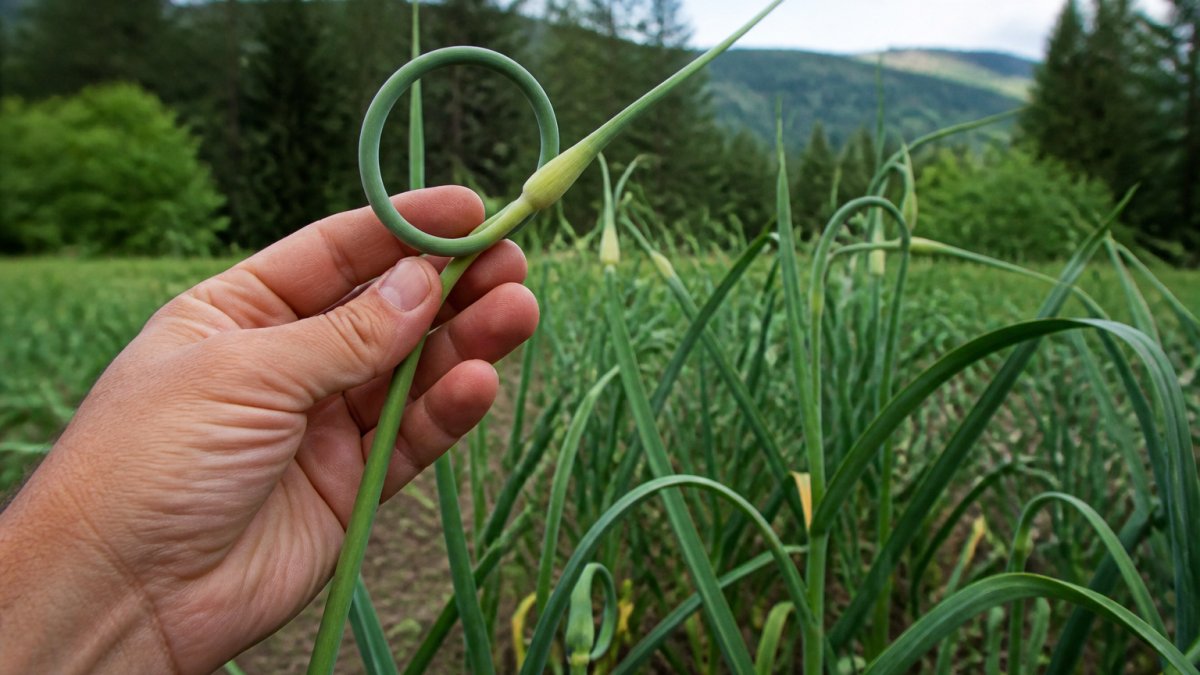
Pro Tip Hardneck varieties send up a curly scape in early summer. Cut it while it is still tender and you get a gourmet ingredient; leave it on and the plant puts energy into the flower instead of the bulb.
Softneck Garlic Varieties: Long Storage and Warmer Gardens
Softneck garlic is the supermarket staple, and for good reason: it stores longer than any other type. These varieties grow well in mild-winter climates and produce bulbs with many smaller cloves packed tightly together. Common softneck varieties include 'Inchelium Red' and 'Silverwhite'.
Gingerfoot Garden
Where hardneck wins on flavor intensity, softneck wins on keeping quality. Growers in warmer regions often find softneck simply more reliable, since it does not demand the deep cold that hardneck needs.
Braiding and Keeping Quality After Harvest
Because softneck garlic has a flexible neck, you can braid the dried stalks into ropes that hang in a cool, dark kitchen for months. Hardneck bulbs, with their stiff stalk, are usually stored as loose bulbs or in bunches. Curing both types properly before storage is what protects that keeping quality.
When to Plant Garlic: Timing by Growing Zone
Plant garlic in fall, roughly four to six weeks before your ground freezes, so roots establish before winter. In colder zones (USDA zones 3-5), aim for late September through mid-October. In milder zones (zones 6-8), you can plant into November or even early December. The goal is root growth, not top growth, before the cold arrives, roots need about four to six weeks of soil temperatures above 40°F to establish.
Check your USDA hardiness zone to time this correctly. Cold-climate growers lean toward hardneck; warm-climate growers lean toward softneck. Either way, follow these steps:
Prepare the bed. Work in two to three inches of compost and ensure the soil drains well. Garlic rots in soggy ground.
Separate cloves. Break bulbs apart the day you plant. Leave the papery skin on each clove.
Plant pointed end up. Set cloves about two inches deep and six inches apart in rows spaced twelve inches apart. In sandy soil, plant three inches deep.
Water once. Give the bed a deep watering to settle the soil, then stop. Fall rain usually provides enough moisture until spring.
Mulch heavily. Apply four to six inches of straw or shredded leaves after the first hard freeze. Mulch prevents frost heaving, which pushes cloves out of the ground and kills them.
In spring, pull mulch back as shoots emerge so the soil warms. Water deeply once a week if rain is scarce, about one inch per week total. Stop watering two weeks before harvest.
Hardneck varieties send up a curly scape in early summer. Cut it while it is still tender and you get a gourmet ingredient; leave it on and the plant puts energy into the flower instead of the bulb.
Pro Tip If you miss the fall window, you can plant garlic in early spring as soon as the soil can be worked. The bulbs will be smaller, but softneck varieties handle spring planting better than hardneck.
For beginners, the biggest timing mistake is planting too late. Cloves need those weeks of cool root growth before the ground freezes. If you plant in November in a cold zone, roots may not establish and winter heaving will push them out.
The Best Garlic to Grow for Beginners: A Climate-Based Decision Guide
The best garlic to grow for beginners is hardneck in cold-winter zones and softneck in mild-winter zones. But the real decision comes down to your winter low temperatures and how you cook. Use this decision tree to pick your first crop.
Step 1: Check your winter low.
Below 0°F for extended periods (USDA zones 3-4): Hardneck is your only reliable choice. Softneck may survive but often produces small bulbs.
0°F to 10°F (zones 5-6): Both types grow well. Hardneck offers better flavor; softneck offers longer storage. Plant both if you have space.
Above 10°F (zones 7-9): Softneck outperforms hardneck. Hardneck needs cold to bulb properly and will struggle in mild winters.
Step 2: Match variety to your goal.
Cold winters, bold flavor: 'German Red' and 'Chesnok Red' are hardneck standards. Both peel easily and have rich, pungent heat. 'Music' is another hardneck favorite for large, easy-to-peel cloves.
Cold winters, long storage: 'Chesnok Red' stores four to six months, longer than most hardnecks. For maximum storage in a cold zone, try 'Siberian' hardneck.
Mild winters, dependable bulbs: 'Inchelium Red' is a softneck that performs well in warm climates and stores six to eight months. 'Silverwhite' is another softneck known for mild flavor and long keeping.
Mild winters, braiding: 'California Early' and 'California Late' are softneck varieties with flexible necks ideal for braiding.
Unsure: Plant a small row of each and compare after harvest. A single row of ten cloves per type costs little and teaches you more than any guide.
Step 3: Consider your kitchen habits.
If you cook garlic weekly and use it within three months, hardneck's shorter storage is not a problem, and you get better flavor. If you want garlic that lasts through winter and into spring, softneck's six-to-eight-month storage window is the deciding factor. Hardneck typically stores three to five months; softneck stores six to eight months under proper conditions.
Central Or Garlic Co hand-selects seed from over fifty heirloom cultivars, so beginners can start with varieties suited to their own growing zone.
Watch Out The most common beginner mistake is planting supermarket garlic. Store-bought bulbs are often treated to prevent sprouting, so they grow poorly or not at all. Always start with seed garlic grown for planting.
Key Takeaway Match the type to your winter low first, then choose a variety by flavor and storage goal. If your winter drops below 0°F, go hardneck. If it stays above 10°F, go softneck. In between, plant both and let your kitchen decide.
Common Beginner Mistakes and Troubleshooting
Small, weak bulbs almost always trace back to one of a few fixable problems. Planting too late, planting too shallow, or choosing the wrong type for your climate top the list. Overwatering in soggy soil rots cloves before they root.
Small bulbs: Usually too little sun or too late a planting date.
No bulb division: Often a warm winter with a hardneck variety that needed cold.
Rotting cloves: Poor drainage; plant in raised beds if your soil stays wet.
Weak flavor: Harvesting too early, before the leaves brown.
Fix the climate match first, and most other problems disappear.
Conclusion: Choosing Your First Garlic Crop
Your first garlic crop hinges on one decision: does your winter get cold enough for hardneck, or mild enough to favor softneck? Get that right and the rest, planting depth, timing, curing, follows naturally. Central Or Garlic Co preserves heirloom cultivars with a soil-first, chemical-free approach, and we hand-select seed so beginners get strong bulbs with the flavor depth that store-bought garlic cannot match. Explore our rare varieties and start your first crop with seed grown to succeed in your garden.
Frequently Asked Questions
Which type of garlic is best for beginners to grow?
Softneck garlic is generally easier for beginners in mild-winter areas because it tolerates warmer conditions and stores longer. Hardneck garlic suits growers in colder zones and rewards them with bigger, easier-to-peel cloves and edible scapes. If your winters drop below freezing for extended periods, hardneck is the safer bet. If you garden in a warm climate, softneck will likely outperform it.
What is the difference between hardneck and softneck garlic?
Hardneck garlic grows a firm central stalk, produces fewer but larger cloves per bulb, and sends up edible scapes in spring. Softneck garlic has a flexible neck made of layered leaves, packs more smaller cloves per bulb, and usually stores longer. Hardneck thrives in cold climates while softneck handles mild winters and warmer growing zones better.
Which type of garlic stores longer?
Softneck garlic typically stores longer, often holding quality for six to nine months under proper conditions. Hardneck garlic generally lasts three to five months after harvest. If you want garlic that keeps through winter and into spring, softneck varieties are the better choice. Hardneck is best eaten fresh or used within its shorter window.
Can beginners grow hardneck garlic?
Yes. Hardneck garlic is actually straightforward to grow if you live in a region with cold winters. Plant cloves in fall, mulch well, and harvest scapes in late spring to direct energy into the bulb. The main challenge is its shorter storage life, so plan to use or preserve most of your harvest within a few months.
Do hardneck and softneck garlic need different growing conditions?
They need similar soil and sunlight but differ in climate tolerance. Hardneck garlic requires a period of cold, ideally in USDA zones 3 through 7, to form proper bulbs. Softneck garlic performs better in zones 8 through 10 where winters are mild. Both types want well-drained soil, full sun, and consistent moisture during the growing season.
Get Started Today

Comments