Troubleshooting Hardneck Garlic Diseases: A Step-by-Step Guide
Last Updated: October 23, 2026
Quick Summary
Hardneck garlic diseases most commonly appear as leaf spots, rust, rot, or mold on the scape and neck rather than the bulb itself. Early diagnosis through visual inspection and identifying whether symptoms are fungal, caused by excess moisture, or environmental stress determines the right treatment approach. Acting quickly to remove affected leaves, improve drainage, and prevent spread stops disease before it damages your entire crop.
Inspect leaves, scapes, stems, soil moisture, and bulb firmness to diagnose hardneck garlic diseases accurately.
Fungal diseases like rust, downy mildew, and purple blotch spread in wet conditions and require improved air circulation and soil-level watering.
White rot survives in soil for 8+ years, so rotate garlic beds for at least three years and never compost diseased plants.
Remove entire plants showing mushy bulbs, severe leaf disease over 30% affected, or confirmed rot immediately during dry weather.
Never replant garlic in affected soil for at least three years after removing diseased plants.
Table of Contents
Why Hardneck Garlic Diseases Demand Different Troubleshooting
Step 1: Diagnose Your Hardneck Garlic Plant Diseases and Symptoms
Visual Inspection Checklist
Symptom-to-Disease Decision Tree
Step 2: Identify Fungal Diseases Affecting Leaves and Stems
Garlic Leaf Rust Treatment and Recognition
Garlic Downy Mildew Symptoms and Early Detection
Purple Blotch and Anthracnose on Hardneck Varieties
Step 3: Recognize Bulb and Root Rot from Excess Moisture
Fusarium Basal Rot vs. White Rot
Neck Rot During Curing and Storage
Step 4: Distinguish Disease from Environmental Stress
Step 5: Implement Garlic White Rot Prevention and Control
Crop Rotation and Soil Management
Selecting Disease-Resistant Hardneck Cultivars
Step 6: Take Action, When to Remove Plants and How to Discard Infected Bulbs
Timing and Removal Protocol
Safe Disposal and Garden Sanitation
Common Mistakes to Avoid When Troubleshooting Hardneck Garlic Diseases
Frequently Asked Questions
Why Hardneck Garlic Diseases Demand Different Troubleshooting
Hardneck garlic varieties grow differently than softneck types. They produce scapes, send energy upward, and face unique disease pressures.
We've worked with growers across the Pacific Northwest who discovered this the hard way. They followed generic garlic advice and still lost crops.
Understanding hardneck-specific troubleshooting saves time and plants. You'll catch problems early, identify the exact cause, and know which action to take. This guide walks you through the process step by step.
Step 1: Diagnose Your Hardneck Garlic Plant Diseases and Symptoms
The first step is always inspection. Look at your plants closely, leaves, stems, scapes, and soil. Write down what you see. This becomes your diagnostic starting point.

Visual Inspection Checklist
Start with these observations:
Leaf color: Are leaves green, yellow, purple, or pale?
Leaf spots: Do you see circular lesions, rings, or streaks?
Leaf texture: Are leaves wilted, curled, or mushy?
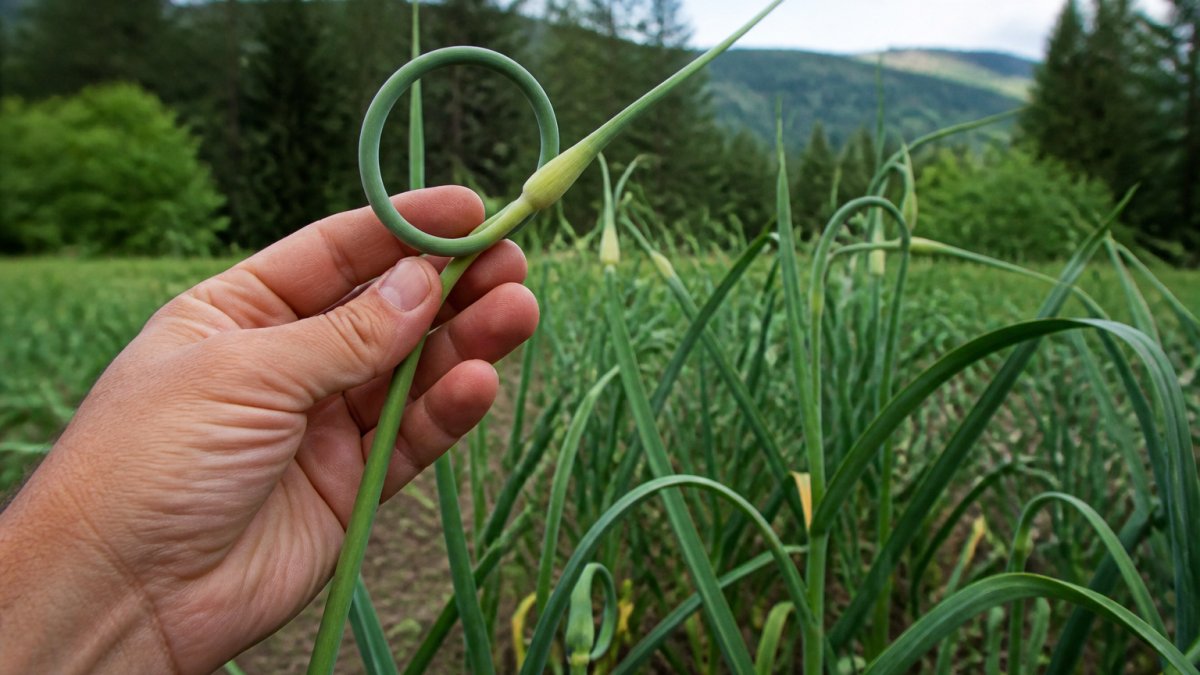
Scape appearance: Is the scape twisted, spotted, or rotting at the neck?
Bulb firmness: Can you gently dig one plant and check if the bulb feels soft or mushy?
Soil moisture: Is the soil waterlogged, dry, or normal?
Plant growth: Are some plants stunted while others look normal?
Smell: Does the soil or plant smell rotten or off?
Write these details down. They guide your diagnosis.
Symptom-to-Disease Decision Tree
Use this framework to narrow down the problem:
Yellow or pale leaves + no spots = nutrient deficiency or early stress (not disease)
Yellow or pale leaves + circular or oval spots = fungal leaf disease
Small purple or brown rings → Purple blotch or anthracnose
White or gray spots → Downy mildew or rust
Twisted or deformed scape + no spots = environmental stress or viral infection
Mushy bulb + soft neck rot + foul smell = neck rot or basal rot
White mold inside bulb → White rot
Brown rot at bulb base → Fusarium basal rot
Stunted growth + yellowing + no visible spots = root or soil issue
Check for soft roots, water-logged soil, or nematode damage
This tree helps you move from symptoms to likely causes. Use it alongside your inspection notes.
Step 2: Identify Fungal Diseases Affecting Leaves and Stems
Fungal diseases are the most common hardneck garlic problem. They spread in wet conditions and progress quickly if ignored. Catching them early makes treatment easier.
Garlic Leaf Rust Treatment and Recognition
Garlic leaf rust appears as small, raised pustules on leaf surfaces. The pustules are orange, yellow, or brown. They look like tiny bumps that dust off easily.
What to look for:
Dusty orange or yellow powder on leaves
Pustules arranged in rings or clusters
Affected leaves eventually turn brown and die
Rust spreads rapidly in humid conditions
When it appears: Mid-season, especially in wet springs or after rain.
Rust thrives in moisture. Improve air circulation by removing lower leaves and spacing plants farther apart. Avoid overhead watering. If rust is severe, remove affected leaves and dispose of them safely, never compost diseased material.
Garlic Downy Mildew Symptoms and Early Detection
Downy mildew is subtle at first. You'll see pale green or yellow patches on leaves. The underside of affected leaves develops a grayish-white coating, that's the fungal spores. Leaves eventually turn brown and papery.
What to look for:
Pale patches on upper leaf surface
Gray-white fuzzy coating on leaf underside
Leaves turning brown from the tip downward
Problem starts on lower leaves
When it appears: Cool, wet weather. Early spring or after extended rain.
Downy mildew needs moisture to spread. Reduce watering frequency and water at soil level only. Increase air movement around plants. Remove infected leaves promptly.
Purple Blotch and Anthracnose on Hardneck Varieties
Purple blotch causes distinctive purple or brown oval lesions on leaves. The lesions have concentric rings. Anthracnose looks similar but tends to form larger, more irregular patches. Both diseases weaken leaves and reduce plant vigor.
What to look for:
Purple or brown oval spots with rings
Lesions start small and enlarge over time
Affected leaves dry out and die
Spots may appear on scapes too
When it appears: Mid to late season, especially in warm, humid weather.
These diseases survive on plant debris. Remove infected leaves immediately. Don't work in the garden when plants are wet, fungal spores spread easily on wet hands and tools.
Step 3: Recognize Bulb and Root Rot from Excess Moisture
Bulb and root rot are silent killers. By the time you notice them, damage is often severe. These diseases thrive in waterlogged soil and poor drainage.
Fusarium Basal Rot vs. White Rot
Fusarium basal rot starts at the bulb base. The basal plate (the flat part where roots attach) turns brown or black. The rot moves upward through the cloves.
White rot is different. You'll see white mold inside the bulb. The disease starts at the base and spreads throughout. The bulb becomes mushy and smells foul.
Key differences:
Symptom | Fusarium Basal Rot | White Rot |
Mold appearance | Brown/black, no white mold | White cottony mold |
Smell | Slightly musty | Strong, foul odor |
Speed | Slower, progressive | Faster, aggressive |
Survival | In soil 1-2 years | In soil 8+ years |
Both diseases require excellent drainage. Never plant garlic in waterlogged soil. Add compost to improve soil structure. Ensure water drains away within hours after rain.
Neck Rot During Curing and Storage
Neck rot appears during curing or storage. The neck (where the leaves attach to the bulb) becomes soft and mushy. White or gray mold may be visible. Affected bulbs deteriorate quickly.
Neck rot happens when curing conditions are too humid or temperature drops too fast. Cure garlic in a warm, dry, well-ventilated space. Air temperature should stay between 70-80°F. Humidity should be low.
Store cured bulbs in cool, dry conditions. Proper curing prevents neck rot entirely.
Step 4: Distinguish Disease from Environmental Stress
Not every plant problem is a disease. Environmental stress mimics disease symptoms.
Nutrient deficiency causes pale or yellow leaves with no spots or lesions.
Drought stress causes wilting and pale leaves. Plants recover quickly after watering.
Waterlogging causes yellowing, wilting, and stunted growth. Soil stays wet.
Cold damage causes purple or reddish leaves, especially in early spring.
Disease always has visible signs: spots, lesions, mold, rot, or oozing.
When in doubt, wait a few days and observe.
Step 5: Implement Garlic White Rot Prevention and Control
White rot is the most serious hardneck garlic disease. Once it's in your soil, it stays for years. Prevention is your best defense.
Crop Rotation and Soil Management
Never plant garlic in the same bed two years in a row. Rotate to a different location for at least three years. This breaks the disease cycle.
Improve soil drainage before planting. Add compost to increase organic matter. This helps soil hold moisture without becoming waterlogged. Use raised beds if your soil drains poorly naturally.
Test your soil pH. Garlic prefers slightly acidic to neutral soil (pH 6.0-7.0) (Why soil pH matters, and how to manage it in your garden).
Selecting Disease-Resistant Hardneck Cultivars
Not all hardneck varieties have equal disease resistance. Some are naturally tougher. Central Or Garlic Co preserves hardneck cultivars. Varieties like German Red and Chesnok Red are honored by the Heritage Seed Alliance for preservation.
When choosing seed garlic, ask about disease history. Buy from growers who test for pathogens. Pathogen-free bulbs reduce disease risk from the start.
Stronger plants resist disease better. This is why soil-first cultivation matters. Well-fed plants in healthy soil outcompete pathogens.
Step 6: Take Action, When to Remove Plants and How to Discard Infected Bulbs
Sometimes removal is necessary. Acting quickly prevents disease from spreading to healthy plants.
Timing and Removal Protocol
Remove plants immediately if:
Bulbs are mushy or rotting
Leaves show severe disease (more than 30% affected)
You confirm white rot or fusarium basal rot
Plants are stunted and not recovering
Pull the entire plant, including the bulb and roots. Don't leave pieces in the soil. Bag the plant in a sealed container so spores don't spread.
Remove diseased plants during dry weather. Wet conditions spread fungal spores. Wash your hands and tools after handling infected plants.
Safe Disposal and Garden Sanitation
Never compost diseased garlic. Compost piles don't get hot enough to kill pathogens.
Clean your tools after removing plants. Wipe them with a cloth soaked in a 10% bleach solution (1 part bleach to 9 parts water).
Sanitize your garden bed. Remove the top 2-3 inches of soil from the affected area and replace it with fresh compost.
Don't replant garlic in that spot for at least three years.
Common Mistakes to Avoid When Troubleshooting Hardneck Garlic Diseases
Growers often make the same errors. Knowing them helps you avoid costly losses.
Mistake 1: Waiting too long to act. Early intervention stops disease spread.
Mistake 2: Overhead watering. Wet leaves create perfect conditions for fungal disease.
Mistake 6: Ignoring early symptoms. Purple spots, yellowing, or rust are warning signs.
Mistake 7: Using the same tools without cleaning. Tools spread disease between plants.
The most successful growers stay vigilant.
Growing healthy hardneck garlic starts with strong seed and good soil.
Frequently Asked Questions
How can I tell whether my garlic has white rot, rust, or downy mildew?
White rot causes a soft, mushy bulb base with white mycelium and small black structures (sclerotia) in the soil; it spreads slowly and persists for years. Rust appears as orange or reddish pustules on leaves, often starting on lower foliage. Downy mildew shows pale, water-soaked lesions with gray mold on leaf undersides, especially in cool, humid conditions. Inspect bulbs at harvest and leaves weekly during the growing season to catch each disease early.
What should I do with garlic bulbs from diseased plants?
Do not save seed cloves from diseased plants, discard the entire bulb. For white rot, basal rot, or fusarium-infected bulbs, remove them from the garden immediately and dispose of them in sealed bags in household waste, never in compost. For minor leaf diseases caught early, you can harvest and cure the bulb normally if the base is firm, but inspect closely before storing. Always inspect your seed garlic before planting to prevent introducing pathogens into next season's crop.
How can crop rotation help prevent hardneck garlic diseases?
Garlic diseases persist in soil for years, white rot sclerotia can survive 15+ years. Rotating garlic to a different bed every 3-4 years starves soil-borne pathogens and reduces fungal spore buildup. Plant garlic in beds that grew non-allium crops (vegetables, legumes, grains) the previous season. This practice, combined with removing infected plants promptly and improving drainage, cuts disease pressure significantly and is especially valuable for heirloom hardneck varieties, which may have less genetic resistance than commercial softneck types.
Can garlic diseases spread through seed cloves or soil?
Yes. White rot, fusarium basal rot, and some nematodes travel on contaminated seed cloves and survive in soil for years. Downy mildew and rust spread via airborne spores and water splash. Always source seed garlic from certified pathogen-free suppliers and inspect cloves before planting. Disinfect garden tools between plants, avoid working in wet foliage, and practice strict crop rotation. Using healthy, inspected seed cloves from a trusted source significantly reduces disease introduction and establishment in your garden.
Get Started Today
Add centralgarlicandheirloom.com as a preferred source on Google →


Comments